Behavioral Topic Mapping: Where Does the AI Actually Sit?

A few days ago, Michelle Niedziela introduced Behavioral Topic Mapping (BTM). It’s a method that explores consumer discussions and clusters them around shared motivations, decision tensions, unmet needs, identities, and experiential goals.
Whenever Michelle and I talk about BTM, one question keeps coming up:
“Where does the AI actually sit?”
The short answer surprises people: it’s a bit like therapy.
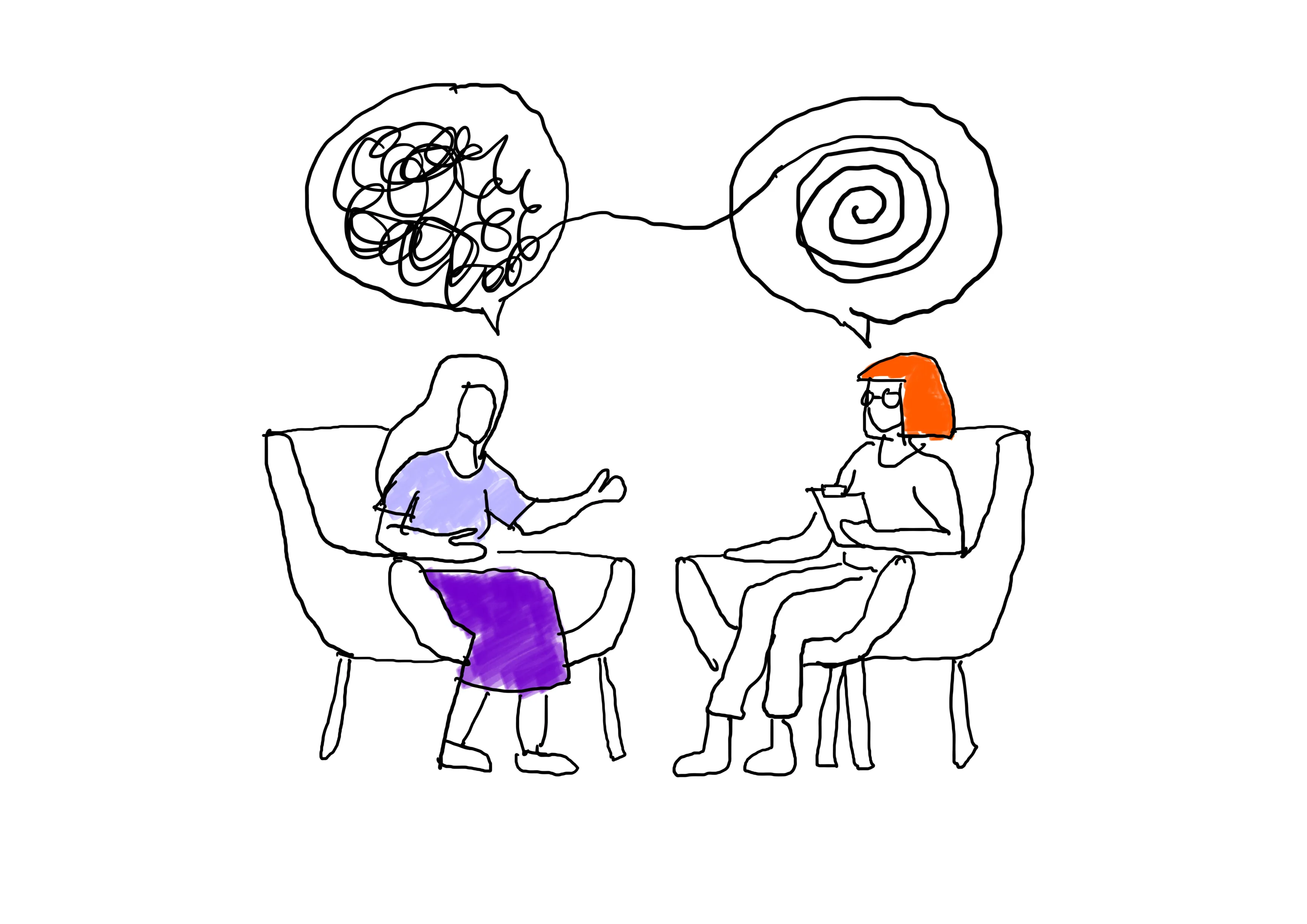
Two Couches
Imagine two couches. One for a consumer, one for us. We ask a little, and then we mostly listen — to the small complaints, the workarounds, the things people are delighted by, and the things they’ve quietly given up on.
A good therapist doesn’t just transcribe the session, or decide the client is wrong about their own life. They listen across many sessions for the pattern the client hasn’t named yet.
That’s the move. The complaints — “it’s greasy,” “it doesn’t fit my morning,” “I’m not sure it’s safe” — are real, and worth taking at face value. But three unrelated-sounding complaints can turn out to be one underlying need. Naming that need is the diagnosis, and it’s never just a summary of what was said.
Once the behavioral need is clear, R&D has something to build against — not one feature, but a question. And a good question usually has many possible answers, which is exactly what you want a development team holding.
So — Where Does the AI Go?
Not where you’d expect. We don’t use it as a stand-in for the consumer. Our input is what real people actually wrote, and we’d rather keep it that way.
Consumers deserve to speak for themselves.
We also don’t hand the language to a model and let it interpret. These models change often enough that an interpretation you trusted last quarter might not reproduce this one — and an insight you can’t reproduce isn’t one you’d want to bet a launch on.
Instead, we put AI where it’s genuinely better than we are: listening. Not smarter listening — just steadier. A person working through thousands of reviews gets tired, gets bored, and reads the three-thousandth one a little less carefully than the third. The machine doesn’t. It gives the last review the same patient attention as the first, and holds every one to the same standard — marking the moments that hint at a motivation, a decision, an unmet need. It gets through far more of them than any of us could, and because it reads them all that consistently, the patterns that matter become legible: the ones that recur across reviews sharing no words. From there, it proposes first-draft names for what it’s finding. That’s real work, and it saves an enormous amount of time.
Where Automation Stops
But it’s the listening half of the session, not the diagnosis. Every analytical system has to decide where automation stops and scientific judgment begins. Behavioral Topic Mapping draws that line on purpose: the machine listens; a behavioral scientist diagnoses.
Michelle and I keep arriving at the same conclusion — that second half is still a human’s job. At least for now (July 2026). Maybe that changes. We’ll say so honestly when it does.
Is Behavioral Topic Mapping just AI reading reviews?
No. The AI listens; a behavioral scientist does the diagnosis. That, in short, is Behavioral Topic Mapping: less magic than “AI reads your reviews and tells you what to build.” It’s also far more defensible — which, if you’re the one making the call, is the part that matters.
Tian Yu co-developed Behavioral Topic Mapping with Michelle Niedziela.